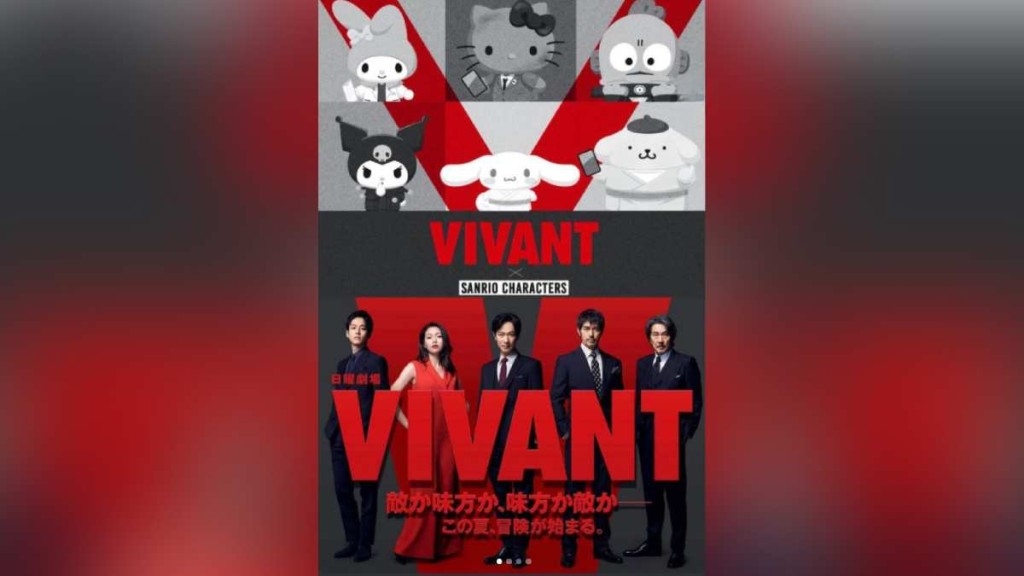
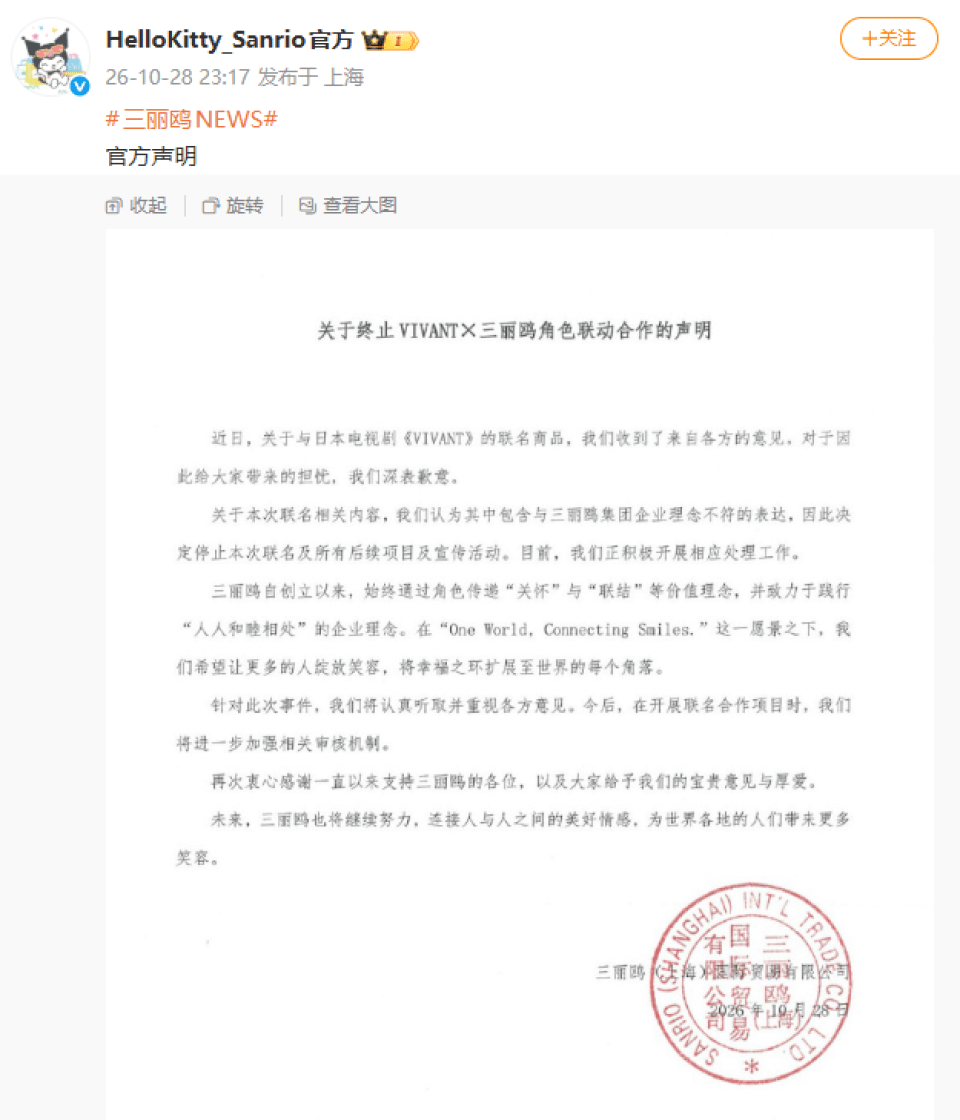
The Japanese drama "VIVANT" starred by actors Kaji Ryôcode and Abe Kunio has fallen into a controversy in China, with CCTV criticizing it for portraying a distorted version of Chinese history and deliberately stirring tensions between Japan and China. As a result of this criticism, the Hello Kitty parent company Sanbee Group announced on the night of July 28th that it would sever its collaboration with "VIVANT." Following similar allegations, "VIVANT" is accused of depicting Chinese intelligence officers using inhumane torture methods identical to those employed by Japanese troops during World War II, which Chinese state broadcaster CCTV deems as an attempt to mislead viewers by associating Japanese wartime atrocities with China to provoke anti-Japanese sentiment. Sanbee Group, in its official statement, emphasized its commitment to the values of concern, unity, and harmonious coexistence. The collaboration with "VIVANT" clearly contradicted its values, and thus the company has decided to halt all associated products, promotional activities, and subsequent plans related to the joint project.
The drama has sparked criticism online, with both social media platforms and traditional media outlets in China calling attention to the portrayal of Chinese characters in a negative and stereotypical light. Sanbee Group's swift action to end its partnership with "VIVANT" reflects sensitivity around cultural representation and historical accuracy in China, especially when involving major media outlets and global brands. This development signals a broader trend where cultural products must navigate the delicate balance between artistic freedom and cultural sensitivity, particularly when dealing with historical and politically charged topics.
The controversy surrounding "VIVANT" and Sanbee Group's response underscore the evolving dynamics in cross-cultural collaboration, especially in the Asian market. As global brands seek to expand their reach and consumer base in China and other parts of Asia, they must increasingly consider the local context and potential cultural sensitivities. The decision by Sanbee, a well-known brand with products enjoyed globally, to distance itself from "VIVANT" in light of criticism highlights the increased scrutiny and accountability multinational corporations face in managing their cultural representations overseas.