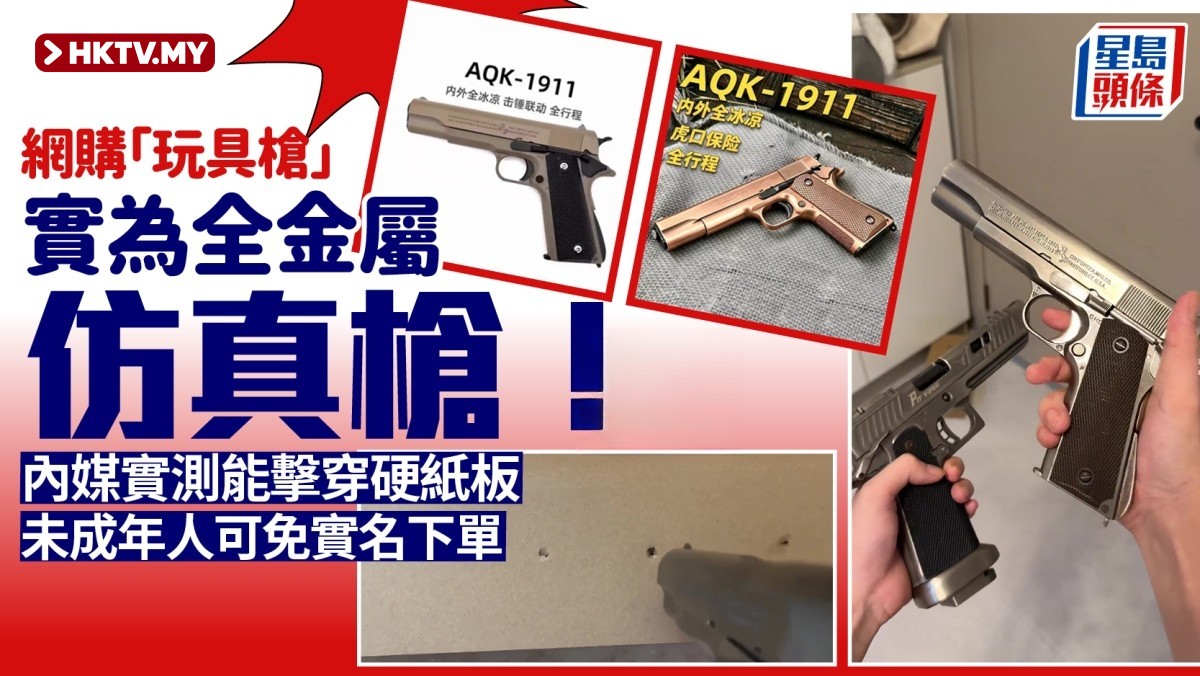
A shocking regulatory loophole has emerged on mainland Chinese e-commerce platforms. Recently, users in Nanning, Guangxi, reported merchants selling high-quality simulated guns disguised as 'educational model toy guns' to minors. Journalists tested a purchased 'non-firing' gun only to find its metallic finish was realistic, and the bullets fired could easily penetrate hard cardboard, demonstrating alarming power. The police identified it as a simulated gun. These over-spec simulated guns are highly popular online, with prices ranging from 200 to 500 yuan and cumulative sales reaching thousands. Merchants openly admitted the guns could射程 up to 25-30 meters. Legal experts emphasize that regulations explicitly prohibit the manufacturing and sale of simulated guns, and e-commerce platforms that allow merchants to evade supervision should bear responsibility. Relevant authorities must cut off the manufacturing and sales chains at the source.
Online bought toy guns found to be simulated guns
A serious regulatory loophole has emerged on mainland Chinese e-commerce platforms. In Nanning, Guangxi, users reported merchants selling high-quality simulated guns disguised as 'educational model toy guns' to minors. Journalists tested a purchased 'non-firing' gun only to find its metallic finish was realistic, and the bullets fired could easily penetrate hard cardboard, demonstrating alarming power. These over-spec simulated guns, sold online without real-name authentication, are highly popular, with prices ranging from 200 to 500 yuan and cumulative sales reaching thousands. The merchants openly admitted the guns could射程 up to 25-30 meters. Related news: Parents warned | Popular 'nose-in energy bars' among Chinese school students; experts warn of nerve damage from peppermint樟; toys like the viral 'radish knife' banned in Guangdong schools.