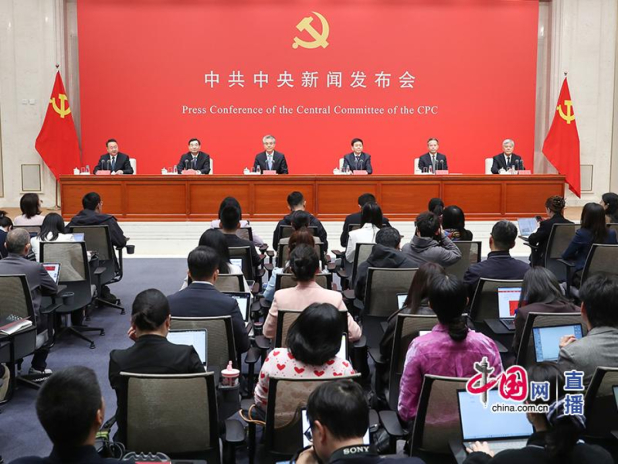
The Communist Party of China (CPC) has outlined four key areas of focus for its anti-corruption campaign at the fifth plenary session of the CPC Central Committee. Senior anti-graft official Zhang Fuhai, deputy secretary of the Central Commission for Discipline Inspection of the CPC and deputy head of the National Commission of Supervision, highlighted maintaining a strict stance against corruption, strengthening power oversight, reinforcing ethical foundations, and preventing corruption through systemic efforts. Zhang also noted that since the 18th National Congress in 2012, disciplinary and supervisory authorities have processed 8.105 million cases and penalized 7.922 million individuals, including 963 members at the central level. Efforts will intensify in areas where power, funds, and resources are highly concentrated, focusing on political-economic collusion, official-business ties, and capital infiltration into politics. Zhang emphasized the need to address new and covert forms of corruption and mitigate misconduct and close-to-home corruption on a regular basis. The plenary, which concluded on Thursday in Beijing, also adopted the Resolution of the Central Committee of the CPC on Certain Major Issues Concerning Persevering with Full and Rigorous Party Self-Governance.
The targets of increased efforts include regions and sectors with significant power and resource concentration, such as state-owned enterprises and financial institutions, where political-economic collusion and official-business ties have been reported. This reflects the ongoing commitment to root out corruption, with the official stating that long-term and persistent efforts are necessary. The move highlights the CPC's continued effort to maintain discipline and uphold integrity within the party and government structures.