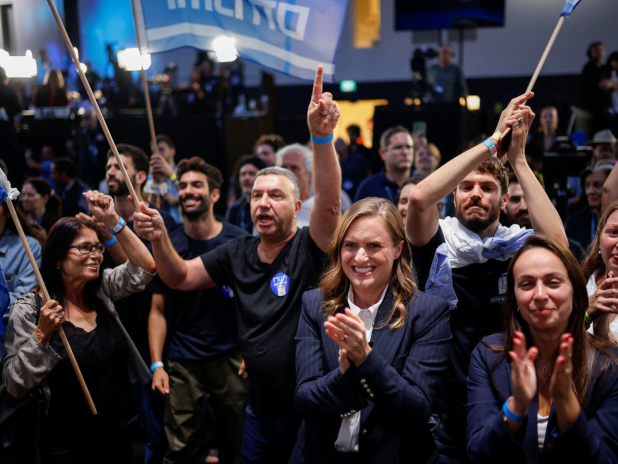
Israel's wartime election was deadlocked, exit polls showed, with Gadi Eisenkot's opposition bloc running neck and neck with Prime Minister Benjamin Netanyahu's camp, leaving neither side with a clear path to power. The projections pointed to a setback for Netanyahu's coalition, though the deadlock could allow Israel's longest-serving prime minister to remain in power as caretaker during coalition negotiations. Turnout was 77.7 percent, the highest in more than two decades.
Far-right religious parties were projected to take a combined 13 seats within Netanyahu's bloc. Arab parties outside the two main blocs could hold the balance of power, but Eisenkot, leader of the Yashar party and a former military chief, has all but ruled out forming a government with them, complicating his path to power. Final results could take days, and Israel's fragmented political system leaves smaller parties potential kingmakers.
The election came just days after Hamas-led attacks and ensuing wars in Gaza, Lebanon, and Iran, which had a profound impact on the Israeli public. While Netanyahu was criticized for the country's biggest security failure, he argued that he had made Israel and the world safer by eliminating top leaders of Hamas, Hezbollah, and Iran. The exit polls represented a major setback for Netanyahu's coalition, but Eisenkot had not emerged as a clear winner, and much could change as votes were counted. The high turnout among Palestinian citizens of Israel signaled a desire for change and their intent to play a decisive role in the outcome.