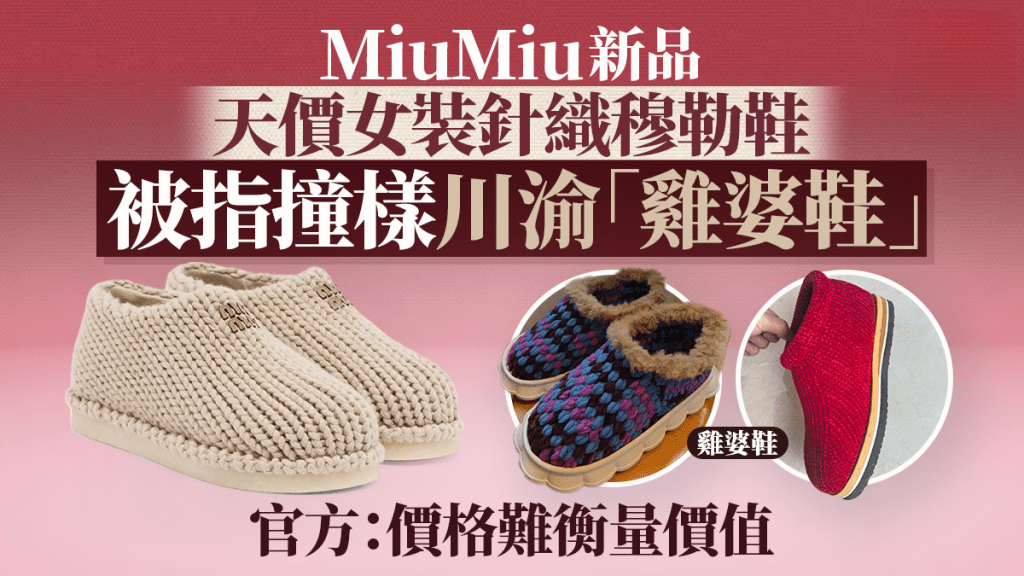
The Italian luxury brand MiuMiu has recently released a new wool mule shoe for women, priced at 9,550 yuan (approximately 11,235 Hong Kong dollars) on its official Chinese website. The new product has quickly sparked debate on social media, with many netizens mocking that the shoe’s appearance closely resembles the traditional homemade winter boots, known as 'jie po xie,' worn by older women in Sichuan and Chongqing regions. They joked that it doesn't seem any different from the shoes hand-woven by their mothers and grandmothers. MiuMiu's official website responded to the controversy, stating that the new shoe is made of knitted material, emphasizing comfort and lightness rather than warmth. However, regarding the shoe's high price, the customer service explained that the pricing is influenced by various factors, including new material research, unique design, exclusive production techniques, and high-end distribution channels, adding that it is not possible to gauge the value of the product solely based on its price. The term 'jie po xie' is colloquially used in Sichuan and Chongqing to describe these traditional handmade woolen shoes, with the name derived from the colloquial term for a mother hen incubating eggs, 'jiegua.' These shoes, although relatively heavy and simple in design, are warmly padded inside and are highly regarded by local residents for their comfort and nostalgia during the winter season.
The shoe’s design has been widely criticized for its simplicity and resemblance to traditional footwear, reigniting discussions about the authenticity and uniqueness of luxury goods. In regions known for their rich cultural heritage, such as Sichuan and Chongqing, the 'jie po xie' is a symbol of home and warmth, deeply rooted in the community's history and daily life. The contrast between this traditional craft and the high-end luxury item from MiuMiu highlights the broader debate over cultural homogenization and authenticity in the fashion industry.
The rapid spread of the discussion and the humorous nature of the comments on social media indicate that the topic has crossed national boundaries, resonating with consumers globally. MiuMiu's response and the ongoing debate around the product could potentially influence future marketing strategies and fashion trends, especially in the context of cultural appropriation and authenticity in haute couture.