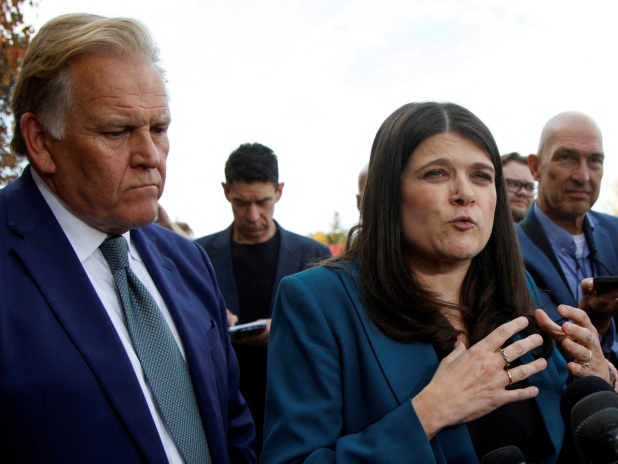
Michigan Democrat Abdul El-Sayed's former opponent Haley Stevens endorsed Republican Mike Rogers, a stunning move as the state prepares for a Senate election that could tip the balance of power in Congress. Stevens, who was uninvited to a joint campaign event with El-Sayed after losing the August primary, endorsed Rogers following a Detroit church service. The switch came as Michigan Democrats were grappling with internal divisions, leaving party leaders surprised just days before the election. El-Sayed dismissed the endorsement, stating that he focuses on voter concerns such as the cost of living. Tensions between the two candidates have been brewing since the primary, with differences on issues like Israel and past controversial remarks from El-Sayed contributing to their strained relationship. Stevens' top aide also resigned over the endorsement. Keeping Michigan in Democratic hands is crucial for the party's efforts to secure a majority during the remaining two years of President Trump's term.
Stevens cited disinviting her from the joint event as the reason for her endorsement, saying, "And he's right. And that's why I am endorsing Mike Rogers for the United States Senate today." The move by Stevens, a strong supporter of Israel, stands in contrast to El-Sayed's critics of the US ally. El-Sayed's past remarks regarding a Michigan synagogue incident and his appearances with controversial figures like Hasan Piker have further complicated the race. Both Stevens and El-Sayed are campaigning for the seat currently held by retiring Democrat Gary Peters.
With less than 48 hours until the election, this endorsement by Stevens to Rogers adds a new layer of complexity to the race. The Michigan Democratic Party, which had been working to unify behind El-Sayed, must now deal with the unexpected defection. The outcome of this hard-fought race could significantly impact the Senate's composition and potentially influence legislation in the remainder of Trump's presidency. Given the high stakes, observers are closely watching the dynamics between the candidates and the broader implications of this endorsement for party unity.