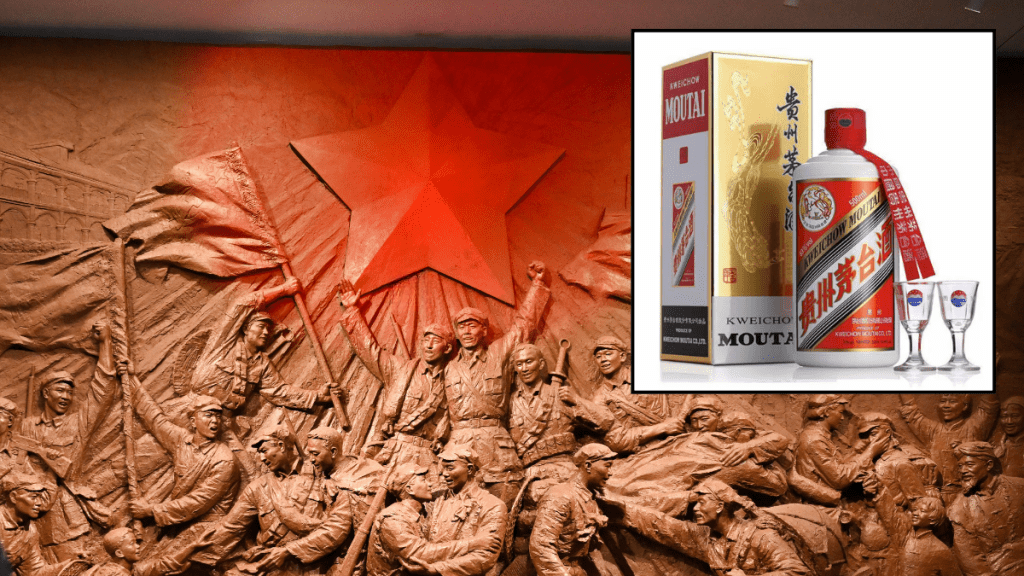


China marks the 90th anniversary of the Red Army's victory in the Long March this year. The official WeChat account of Beijing Municipal Committee of the Chinese Communist Party's Cyberspace Administration posted an article denying the rumor that the Red Army used Maotai liquor to wash their feet during their passage through Maotai Town in Guizhou. The article explains that, in March 1935, during the Long March, the Red Army encountered numerous foot problems due to long marches and the humid weather. In this dire situation, the rumor of the Red Army washing their feet in Maotai's wine pools was deliberately spread by the Kuomintang, even including fabricated details like Soviet advisor Li De bathing in the wine pool. According to the article, Marshal Peng Dehuai's wife, Deng Yingchao, recalled that the Red Army had confiscated some Maotai liquor which they used for medicinal purposes rather than drinking. The article further notes that this was deemed a necessity due to the lack of medical supplies. The article also cites a 1935 notice from the Red Army's Political Department emphasizing the protection of Maotai's facilities, emphasizing that the wine should only be traded through official channels. It concludes by stating that the strict rules demonstrated the falsity of the foot-washing rumor. The Long March, which lasted from October 1934 to October 1936, saw the Chinese Communist-led Red Army traverse a grueling two-year journey after a defeat against the Kuomintang's encirclement and suppression campaigns.