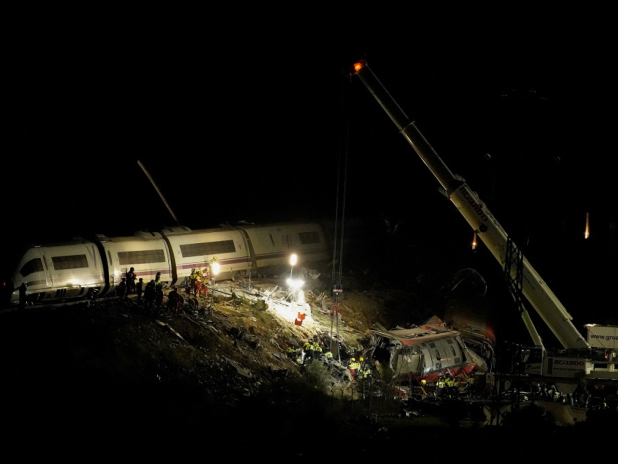
A high-speed train collision south of Madrid killed 68 people and injured over 100, with the toll expected to rise, in one of Europe's deadliest such disasters this century. The accident, one of two to hit Spain this year, has raised questions about the country's rail safety. Transport Minister Oscar Puente stated that the collision occurred due to a train resuming its journey after a technical failure in the automatic control system, despite no service resuming on the 69-kilometre stretch until the accident. After the Renfe train resumed and travelled 25 kilometres, it crashed into a stationary Iryo train, whose speed could have been up to 200 kilometers per hour. The collision takes place ahead of an early general election on November 29, where current Prime Minister Pedro Sanchez seeks to overturn unfavorable polls. The accident has led to calls for an inquiry into the country's railway safety systems.
The rail network in Spain, which has been heavily invested in and is now the second-largest in the world after China's, has faced significant scrutiny following this accident. The incident comes just one month after another high-speed train crash, which claimed 46 lives, further raising safety concerns. The tragic event has prompted calls for transparency and accountability, with Spanish leaders suspending campaign activities. The Spanish royal household expressed shock and concern, offering support to those affected. The accident underscores the importance of robust safety measures in operational railway systems.
The recent high-speed train accident in Spain has sent shockwaves across the nation and beyond. It marks the country's deadliest train disaster in nearly a decade, with 68 confirmed dead and over 100 injured. The immediate aftermath of the collision, which occurred around 130 kilometers south of Madrid, has seen emergency services working tirelessly to rescue survivors, with dozens more bodies likely to be found. The transport minister has acknowledged an "error" and "inexplicable circumstances" leading to the crash, highlighting potential flaws in Spain's rail safety protocols. As the full extent of the tragedy becomes clear, it is a somber reminder of the critical need for rigorous safety measures in the nation's transportation system, especially as Spain prepares for a crucial election.