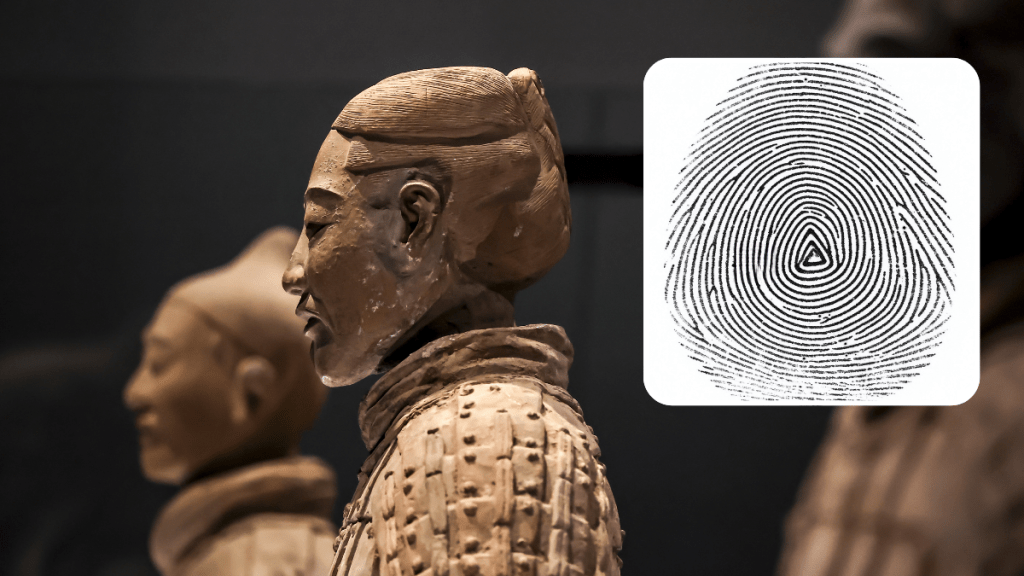
For decades, the public perception of the grand army of terracotta warriors at Emperor Qin’s tomb in Xi'an was that they were primarily created by adult male craftsmen. However, recent research suggests that the creation of this vast underground army may have involved individuals of different ages and genders. The Shaanxi Provincial Institute of Archaeology and Shandong University’s Archaeology Institute collaborated to conduct a study on the age and gender composition of the terracotta warriors' creators, which was published in the international heritage journal, Journal of Cultural Heritage. The study, which analyzed fingerprints on the terracotta warriors, revealed that adult women and youths may have been involved in the production process. From 23 terracotta pits, the research team extracted 79 independent fingerprint samples from 23 terracotta figures. By applying the Bayesian mixture model for fingerprints, they estimated the age and gender structures of the group. Results showed that 45.0% of the fingerprints belonged to adult men, 32.7% to adult women, and 22.3% to adolescents under 15 years old. This research provides the first quantified biological evidence suggesting that while adult men were primarily responsible for the creation of the terracotta warriors, females and youths also contributed to the process, possibly in tasks such as sculpting, transporting, or assembling the figures. The discovery has sparked public interest and discussion online, with many commenters expressing surprise at the diversity of contributors from different age and gender groups in ancient times. The study not only challenges traditional beliefs but also highlights the significant contributions of women in history, who until now were often overlooked in such narratives.
The fingerprints predominantly appeared on the head, arms, and armor parts, supporting the known "mold integration and segmented assembly" production method. The study also found that both adult males and females’ fingerprints peaked around ages 20, and the proportion of youth aligned with historical records indicating that adolescents often assisted craftsmen in ancient apprenticeship systems. The results, however, should be interpreted as estimates based on the available sample, as T23 pit was only a localized area and the sample and reference data had certain limitations. This study paves the way for future large-scale fingerprint demographic surveys in pits like the Second Pit, and its findings are celebrated as a significant step in understanding ancient craftsmanship and societal roles.