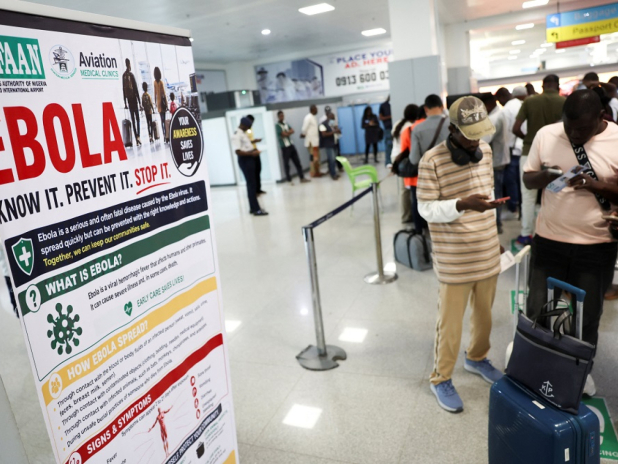
The World Health Organization (WHO) has cautioned that Africa is facing a complex Ebola outbreak as the virus has spread from East Africa to Nigeria, marking the first recorded case in West Africa. This development follows the announcement by Nigeria on Tuesday that a wife of a diplomat had contracted the Bundibugyo strain of Ebola, which is currently causing a major outbreak in the Democratic Republic of the Congo (DRC). Since her arrival in Nigeria earlier this month, health authorities have been tracking down her contacts; although the exact number of quarantined individuals is not disclosed, it includes “high risk” persons who have been isolated at a facility. Nigeria, the continent’s most populous nation, is now the fourth African country to be affected by this outbreak, following the detection of nine cases in Kenya, also in the eastern part of the continent, as early as October 6. This Ebola outbreak emerged in DRC and has become the country’s deadliest since mid-May, with over 4,000 fatalities out of more than 9,000 confirmed cases. The strain responsible is the Bundibugyo, for which there is currently no vaccine or specific treatment. The Bundibugyo strain is being transported through air travel, with the Nigerian patient arriving in Abuja from Uganda via an Ethiopian Airlines flight. Health officials are attempting to trace the patient’s travel history to determine the point of exposure, particularly at Addis Ababa where she transited. The patient, originally from Uganda but based in Abuja, did not visit DRC as suggested by Ugandan authorities, indicating a possible new source of the virus. This latest case has renewed concerns about public health threats in densely populated nations, recalling the widespread west African outbreak that killed over 11,000 people between 2013 and 2016. However, Nigeria demonstrated effective containment during that period, managing only 19 infections and seven deaths, a result that has bolstered confidence in the nation’s ability to manage newer public health challenges. For now, officials are focusing on contact tracing and ensuring the locations of all contacts are known to prevent further spread. (AFP)
The patient’s travel history is currently under investigation, with officials attempting to trace potential points of contact, particularly at the airport in Addis Ababa, where the patient transited. Health authorities are also trying to determine if there was any contact with Kenya’s first victim, who also left Uganda on October 3. This renewed case has sparked concerns about public health threats in densely populated nations, particularly in light of Nigeria’s past success in containing the virus during the 2013-2016 outbreak. Nigeria managed to keep the infection within its borders, with just 19 infections and seven deaths, leading to increased confidence in its ability to respond to new health challenges. However, current strategies are centered on contact tracing and ensuring the locations of all at-risk individuals are known to prevent the virus from spreading further into the community. (AFP)
As the outbreak continues its spread, the WHO is working closely with local authorities to manage the situation. Mohamed Janabi, the regional director for WHO in Africa, highlighted the complexity of the current landscape. The Bundibugyo strain, which lacks a specific treatment or vaccine, poses ongoing challenges for containment and control. The focus remains on tracing contacts and isolating high-risk individuals to prevent further transmission. The international community is closely monitoring the situation, and ongoing discussions and collaborations between health experts are aiding in the prevention and management of this evolving health crisis. (AFP)