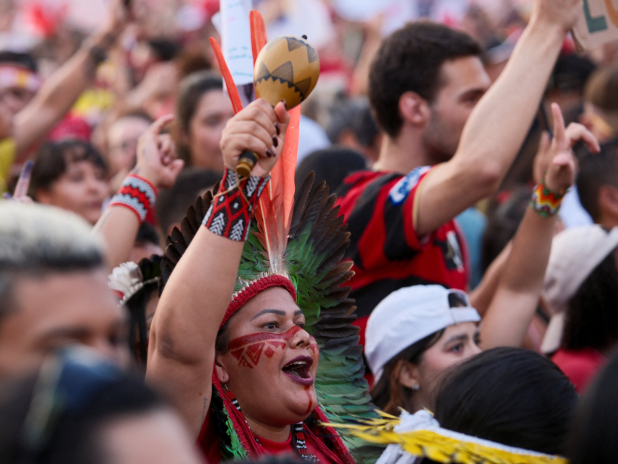
Brazilian President Luiz Inacio Lula da Silva and senator Flavio Bolsonaro concluded their campaigns on Saturday, ahead of Sunday's presidential runoff vote, with mass rallies aimed at mobilizing supporters and swaying undecided voters. The two contenders, who have been neck and neck in polls after Bolsonaro's unexpected strong performance in the first round, competed in a series of large-scale events. A recent CNT/MDA poll indicated a 1.3-point lead for Bolsonaro. Lula, seeking his fourth non-consecutive term, launched his final day of campaigning with a march along the iconic Copacabana beach in Rio de Janeiro. Thousands of his base, many of them leftists, participated in the rally under the scorching sun. "We're going to win the election for one simple reason: it's true that the people want change, (but) they want to move forward. They don't want to go backward," Lula told reporters before the march. The senator, meanwhile, joined a motorcycle caravan in Belo Horizonte, the capital of Minas Gerais, a crucial battleground state where he led Lula by around five percentage points in the first round. The younger Bolsonaro participated in a campaign march in his home state of Rio de Janeiro, passing along Paulista Avenue, a traditional site for political demonstrations in the country's largest city. He expressed excitement about the crowds and the potential for shaping Brazil's future alongside his father. In a TV Globo debate the day before, the two candidates clashed over the cost of living and traded personal attacks, highlighting the intense competition for the presidency.
Lula's rallies had a bittersweet feel, as it is expected to mark his final presidential campaign due to the president's advanced age. Many supporters expressed fondness and pride in his remarkable journey, while Bolsonaro, the eldest son of former President Jair Bolsonaro, emphasized the significance of the final hours before Sunday's vote, aiming to capture the attention of Minas Gerais and securing a win that would determine the future of the nation for 30 or more years. The upcoming electoral result is anticipated to shape Brazil's political landscape significantly.
Both candidates have been working tirelessly in the final stretch of their campaigns, capitalizing on the fervent support and attempting to secure votes from those undecided. The tension between Lula and Bolsonaro is palpable, with the younger Bolsonaro leveraging his late family support and Minas Gerais's pivotal role in determining the outcome. The race promises to reveal which side will ultimately shape Brazil's future, with high stakes for both the domestic policies and international relations of the country. The results of the upcoming runoff are expected to influence not only Brazil's immediate political trajectory but also its influence in the region and beyond.