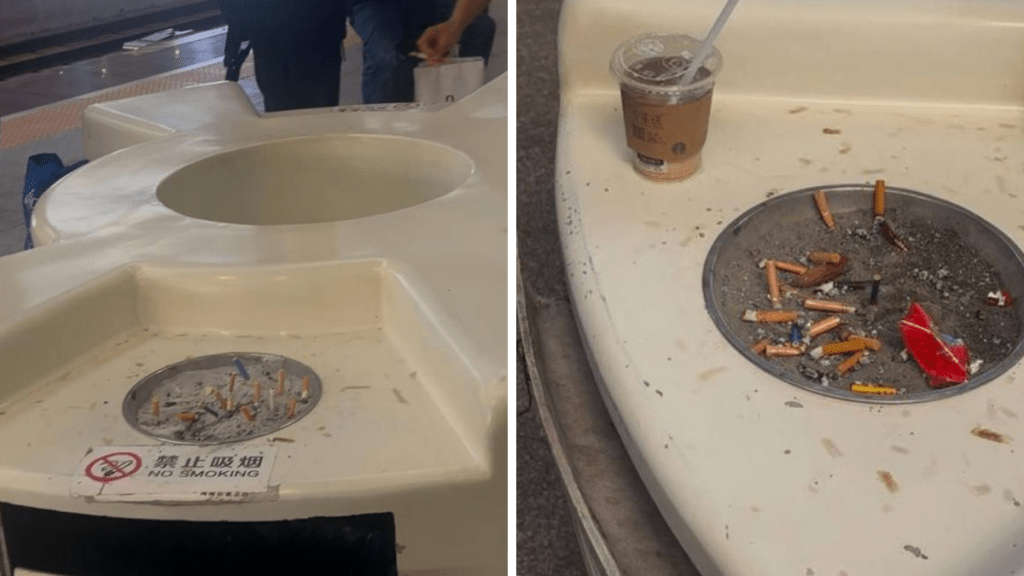

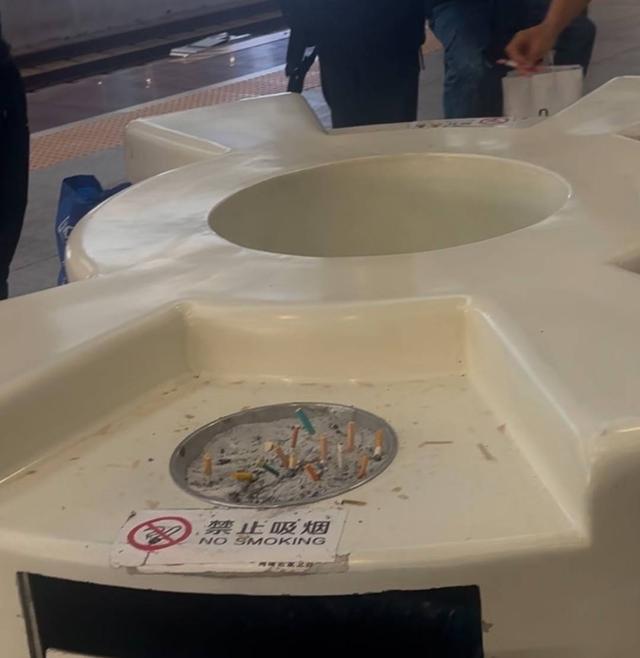

Recently, a female passenger named Chen Shiyu (a pseudonym) brought a lawsuit against Ningbo Railway Station and China Railway Shanghai Group, after noticing that cigarette butt receptacles and ashtrays were placed beneath the "No Smoking" signs on the high-speed rail platforms of Ningbo Railway Station. Chen believed that during her frequent travels on the route, passengers were permitted to smoke despite the signs, rendering the station an inhospitable environment for non-smokers and subjecting them to secondhand smoke.
Prior to the trial, the "No Smoking" signs in Ningbo Railway Station were surprisingly removed, but the ashtrays remained. This alteration sparked widespread criticism from netizens, who argued that the station was undermining its own public health policies. Chen's legal complaint aimed to remove these smoking aids and called for stronger smoking regulations, demanding symbolic compensation of 1 RMB for both mental and medical damages. The case is currently under mediation at the Hangzhou Railway Transport Court.
The controversy highlights the complexities surrounding smoking regulations in public spaces. The Public Health Management Regulations define indoor spaces as those with covered roofs and three or more walls, which excludes high-speed rail platforms. Railway authorities, as commercial entities, do not have the authority to enforce smoking bans or impose fines. This case has drawn attention from the public, with many believing that mandatory smoking cessation should be a prerequisite for public service positions.