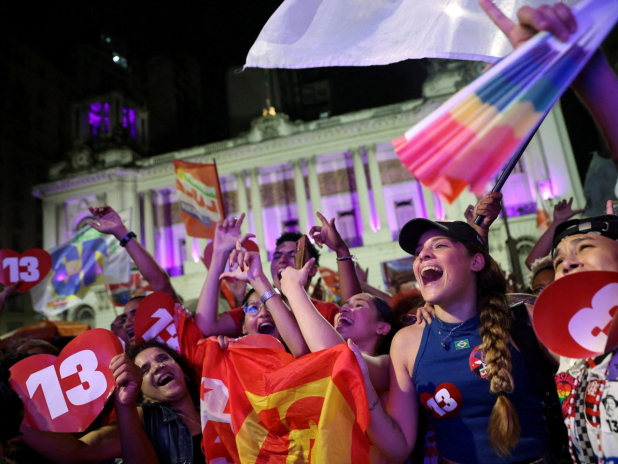
Brazilian President Luiz Inacio Lula da Silva secured an unprecedented fourth term on Sunday, defeating Senator Flavio Bolsonaro in a shock result that reversed anti-incumbent trends in Latin America. Lula's victory is remarkable given the recent corruption scandals and rising prices that soured voters on him and his Workers' Party, as well as societal changes that left him out of touch with the country's growing informal economy. This election marks another comeback for Lula, who previously served as president from 2003 to 2011 and was released from jail in 2019 due to the overturning of his corruption convictions. Lula campaigned on a mix of pragmatism and populism, promising initiatives like free nationwide weekend public transport and an expansion of his welfare program. He also championed a major labor reform that passed Congress with strong support. However, Lula's fourth term may present challenges, as the newly elected Congress is the most conservative since Brazil's return to democracy in the 1980s. This conservative majority could limit Lula's ability to implement his economic and social policies, potentially leading to a diminished influence over key areas such as Supreme Court nominations and even the threat of impeachment. Additionally, Brazil faces an economy forecast to grow by only 2.3 percent next year, constrained by high interest rates and public debt surpassing 82 percent of GDP.
RTHK
Published: 2026-10-27 09:38:03
Lula Elected as Brazil's Fourth President
Brazilian President Luiz Inacio Lula da Silva won the fourth-term election on Sunday, defeating Senator Flavio Bolsonaro, the oldest son of former President Jair Bolsonaro. Amid several corruption scandals and declining popularity over the past decade, Lula's comeback victory was unexpected. He emphasized improvements in living standards and warned of potential risks under the Bolsonaro administration's policies.
Source:
RTHK ↗