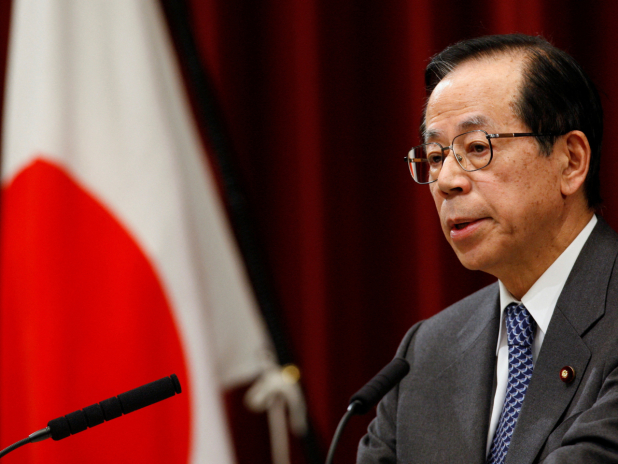
Ex-Japanese prime minister Yasuo Fukuda, who served briefly in office and pursued closer ties with Asian neighbors, particularly China, has passed away at the age of 90. The news was reported by the Nikkei business daily, stating that Fukuda died on Thursday from heart failure. His political career included a short tenure after Shinzo Abe suddenly resigned in 2007, lasting even shorter than his father Takeo's two-year term. Born into a political family, Fukuda worked for nearly two decades at an oil company before becoming a political secretary when his father took office in 1976. After becoming a Member of the Japanese lower house in 1990, he served as chief cabinet secretary from 2000 to 2004, where he resigned amid accusations of not paying into the pension system. Known for his blunt manner, Fukuda's controversial comments in 2003 suggesting women who dressed provocatively were asking for victimization drew public criticism. After his resignation in 2008, Fukuda focused on diplomacy, making multiple trips to China to improve relations. He left behind a son, Tatsuo, who is also a lawmaker and is considered a potential future leader.
Known for his diplomatic approach, Fukuda sought to mend strained ties between Japan and China during and after his time in office. His efforts to engage with China were a significant part of his political legacy, as he recognized the importance of regional cooperation and stability. The brief yet impactful chapter of Fukuda's leadership highlighted the challenges and dynamics of Japanese politics and diplomacy in the early 21st century.
Fukuda's passing marks the end of an era in Japanese politics, where his administration is remembered for its initial forays into regional diplomacy, especially with China. His son, Tatsuo, continues to follow in his political footsteps, indicating the enduring influence of political dynasties in Japanese governance. The legacy of Fukuda's tenure remains relevant in the ongoing complexities of Japanese diplomacy and domestic politics.