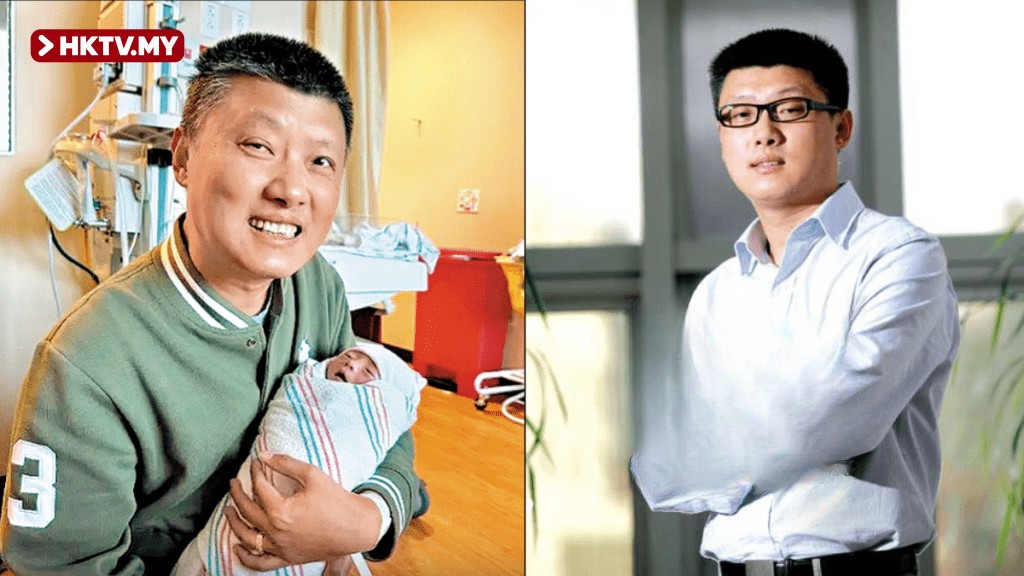

Free-speech advocate Yu Tengfei, once hailed as the 'Greatest History Teacher in History,' faced intense criticism after just two months in the US, where he posted on social media about healthcare and traffic issues on his social media, labeling the US a 'junk country' because of cumulative $18,500 medical bills, and threatening to 'surrender to authorities in China if things don't work out.' These posts ignited ridicule on mainland Chinese internet, questioning his decision to move to the US.
Background: From Fame to Vanish
Yu Tengfei's story marks the rise and fall of a cultural product and the era's transformation. A graduate of Capital Normal University's history department, he once served as a history teacher at Capital Normal University Affiliated High School and the Haidian Teacher Refresher School. In 2008, he gained fame through his witty and engaging lectures on CCTV's 'Hundred Family Forum.' His teaching videos, known for their unique and entertaining style, went viral online and earned him the title of 'The Greatest History Teacher in History.' However, in 2010, the resurfacing of videos where he criticized Mao Zedong triggered a controversy. Comments like 'Japan's textbook revision rate is much lower than China's, and China's textbook accuracy rate is less than 5%. It's purely nonsense,' and 'Thirty million people died from natural disasters in three years, more than were killed across Europe in World War II,' led to a public outcry. The reported complaints to the school where he worked at the time, the Haidian Teacher Refresher School, resulted in a warning and a 'police warning talk,' forcing him to make a public self-criticism. This event foreshadowed his eventual vanishing act.
In September 2017, Yu Tengfei's Weibo account, which had 13 million followers, was suddenly suspended, and his programs on various online platforms were removed. Rumors spread that he had been picked up by the police. This period reflects the struggles of intellectuals under China's harsh internet censorship and ideological pressure. After a long period of vanishing from public eyes, he resurfaced again in early September 2023 when a friend posted on X (formerly Weibo) that he had arrived in Texas, USA. Speculation surrounded his motivations for immigration, with some suggesting he was hesitant due to poor English proficiency, reflecting the pressures and uncertainties he faced in China.
Analysis: Challenges of Immigrant Life and Internet Snide Remarks
There is evidence that Yu Tengfei's early life in the US was fraught with difficulties. According to screenshots from his social media posts, on October 6th, he lamented spending several hours in the emergency room, only to receive a bill of over $5,000 (approximately 390,000 HKD), with more than $1,000 (about 78,000 HKD) being out-of-pocket expenses. He angrily labeled the US a 'junk country' and vowed to 'return to China and surrender to authorities if things didn’t work out.' Later that day, another post mentioned an inflamed blister on his wife’s foot resulting in a staggering $13,500 (about 1.05 million HKD) bill, which local residents found extremely unreasonable. This experience left him feeling desperate about his decision to leave China, as he had hoped that emigrating would alleviate his anxieties, but instead, it had subjected him to hardships. It was only recently that he was stopped by police near his daughter’s school due to speeding and scheduled to appear in court on November 8th. These experiences ignited widespread ridicule on mainland Chinese internet. Netizens generally viewed his move to the US as a significant gamble and questioned whether he could find a stable job in the country.
An analysis suggests that Yu Tengfei's situation reflects a complex psychological state of intellectuals attempting to seek personal freedom and comfort through immigration while adhering to political security requirements. Although his initial reasons included his children's education and escaping certain realities of Chinese society, the substantial gap between his expectations and the actual difficulties he encountered may indicate that his adaptation to the new life was much harder than he had anticipated. For intellectuals like Yu Tengfei, emigrating to the US not only entailed a geographical shift but also a massive transformation in lifestyle and values. The challenges and shocks of adapting to a new environment are far beyond what the average person can imagine. His experience may offer some reflection for others considering immigration.