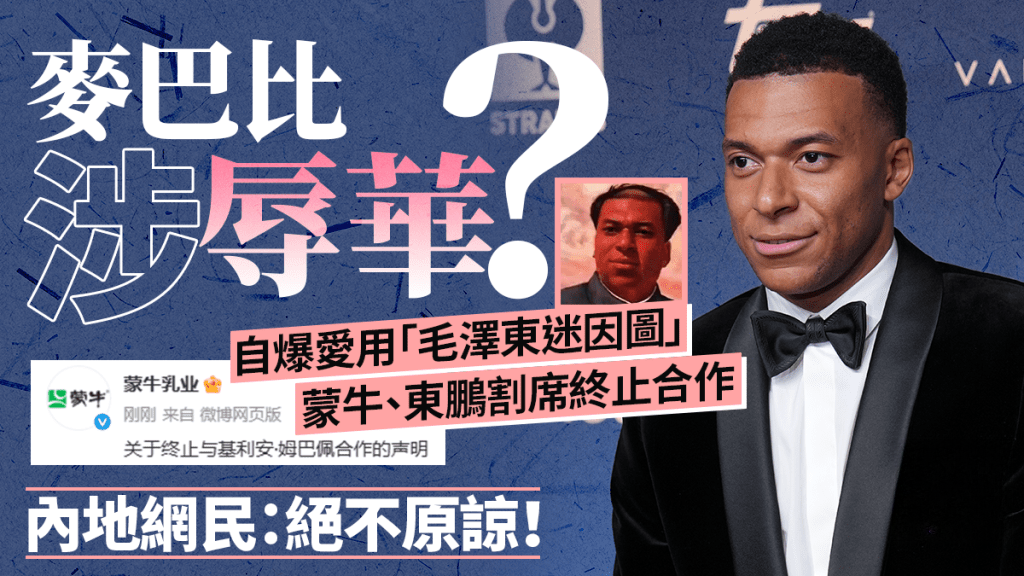
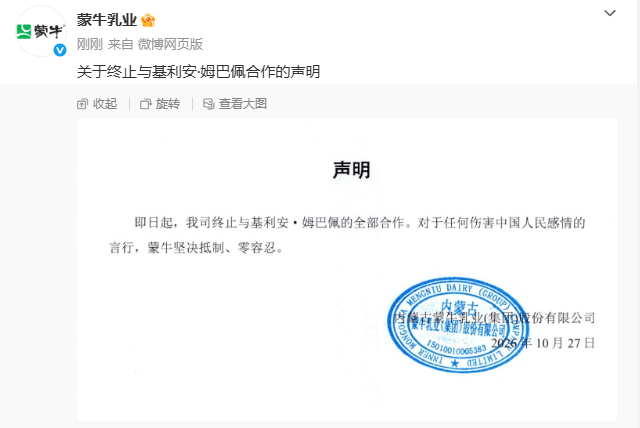
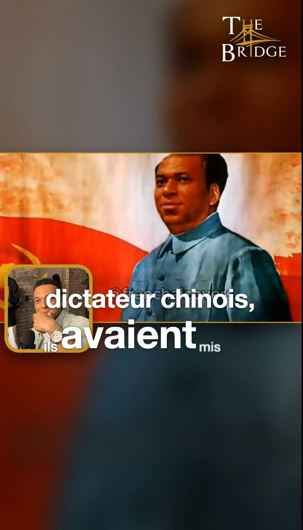
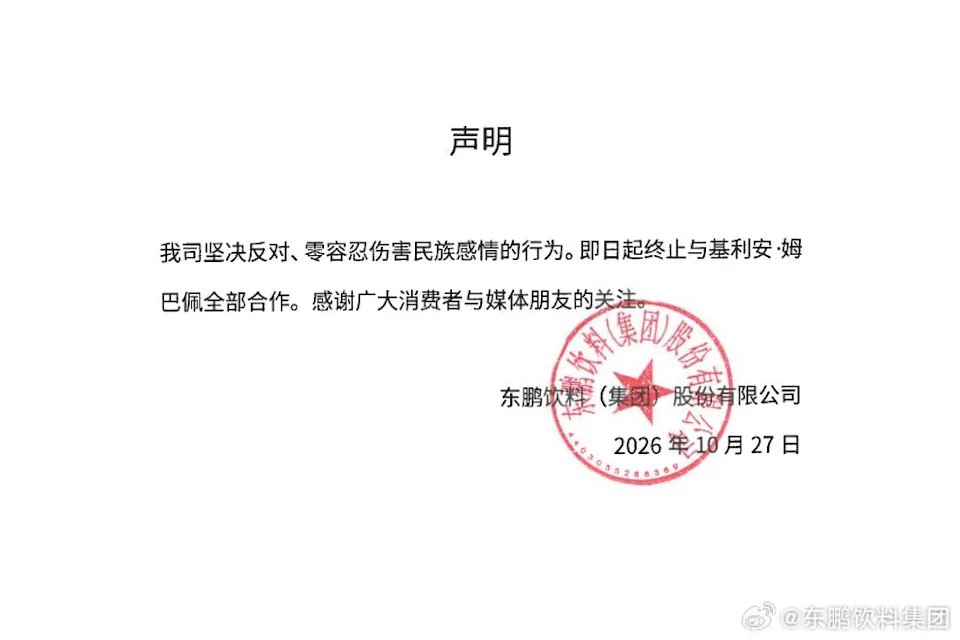
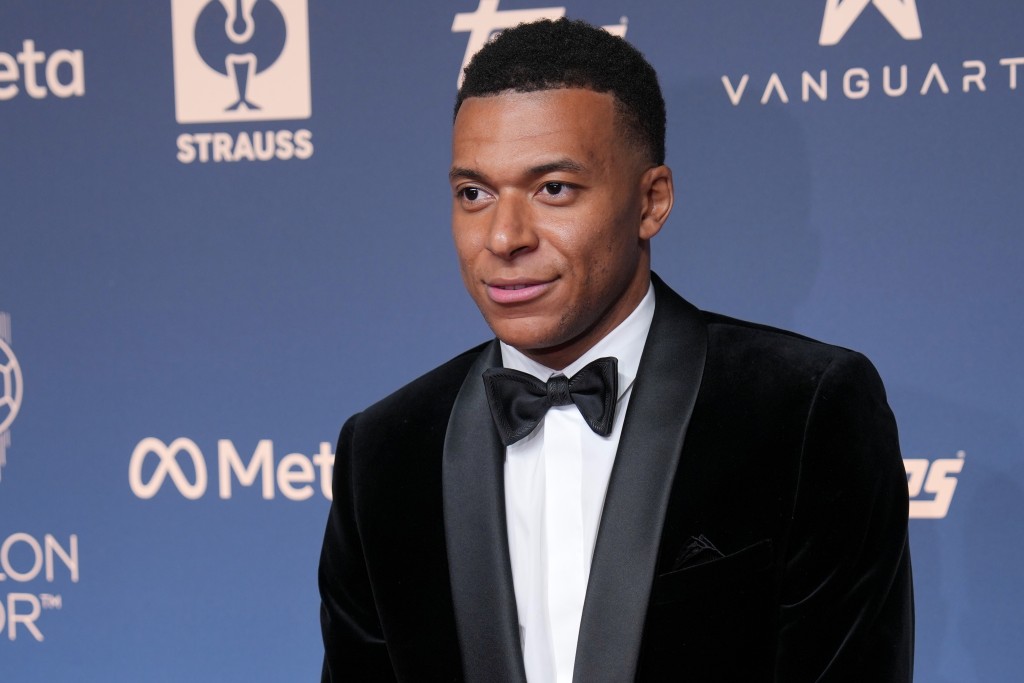
French football star Kylian Mbappé encountered backlash after discussing his fondness for a meme featuring Chairman Mao Zedong's likeness, leading multiple Chinese brands to sever ties with him. Following critical reactions fromWeibo users and media outlets, statements from brands like Mengniu Dairy, Dongpeng Beverage, and Milkground all condemned Mbappé's comments as offensive to Chinese sentiments. Mbappé mentioned in an interview that he often uses this meme when playing PlayStation with friends, referring to it as the funniest. In response, Mengniu Dairy issued a statement expressing strong opposition to any emotionally hurtful actions, immediately suspending all collaborations with Mbappé. Dongpeng Beverage and its subsidiary Boostala also joined in with similar statements of severing ties. Meanwhile, El Pintor, a popular sports media site, denounced Mbappé's remarks, emphasizing the serious harm to Chinese feelings.
Memes featuring Chairman Mao Zedong have been a recurring internet phenomenon in China, often being used as a satirical tool in digital culture. However, Mbappé's statements went beyond the typical internet slang, hitting a sensitive nerve with Chinese audiences. This incident reveals the complex cultural and sensitivities around historical and national figures in China's digital age. Social media and online platforms have amplified public sentiments on such matters, leading to swift brand reactions and public debates. The case underscores the challenges non-Chinese public figures face in understanding and respecting Chinese cultural sensitivities, even in light-hearted contexts like internet humor.
In the broader context of global brands operating in China, such incidents highlight the need for increased cultural awareness and sensitivity training for international celebrities and influencers. As China's influence continues to grow globally, understanding and respecting local cultural norms is becoming increasingly important. This event not only brought attention to the specific historical figure of Chairman Mao but also broader issues of historical representation and cultural sensitivity. Brands and public figures can either bridge divides through cultural literacy or antagonize public opinion, as seen in the case of Mbappé and his various Chinese partners.