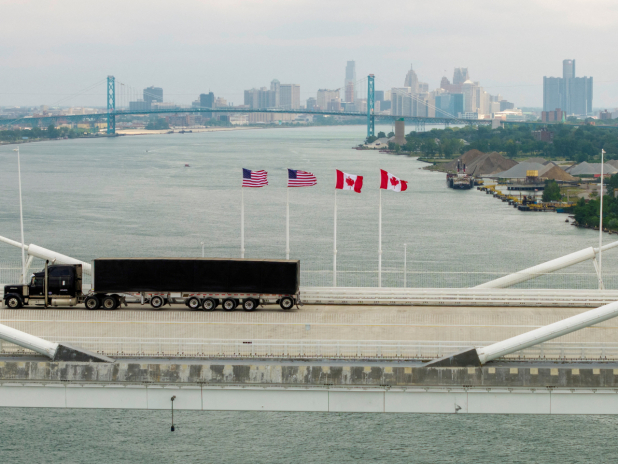
US President Donald Trump signed an order on Friday to remove 50 percent tariffs on certain Canadian agricultural and forestry products, in an attempt to benefit American businesses in Maine and other states, ahead of the upcoming midterm elections. The tariffs imposed by Trump in August have strained relations with Canada and caused difficulties for US companies that rely on Canadian goods. Trump's order specifically exempts plywood sheets, paper products, machinery, refrigeration equipment, and packing crates among other items. The changes would take effect on October 30. Trump added more Canadian products to the 50 percent tariff list to offset the relief, causing concern for some, including Democrat Troy Jackson, who is seeking to oust Maine Senator Susan Collins.
With the November 3 elections approaching, Collins faced mounting pressure from Maine businesses and farmers, particularly those in rural and coastal areas, who rely on Canadian goods. The White House spokesperson Matthew Middleton stated that Trump continues to address Canada's "discriminatory treatment" of US commerce and that the new moves are part of refining the previously announced tariffs. Dominic LeBlanc, Canada's minister for trade with the US, said Ottawa is assessing the tariff changes and is ready to work towards a more beneficial trading relationship. The economies of Michigan and Maine, long intertwined with Canada, are critical in Republicans' efforts to maintain their slim majority in the Senate.
The move comes amid ongoing tensions over trade between the US and Canada, and highlights the delicate balance Republicans face in northern border states. While some Republican candidates like Michigan's Mike Rogers praised Trump for imposing tariffs on Canadian trash, others like Oregon Senator Ron Wyden condemned the tariff policies. The tariffs have raised prices on thousands of American families' necessities, with the threat of blocking Canadian jet maker Bombardier from the US market having recently become a political issue in Kansas. Trump's 11th-hour attempt to save Collins' political career is seen as an admission that US voters are rejecting his trade policies.